Understanding Satoshi: Bitcoin's Smallest Unit
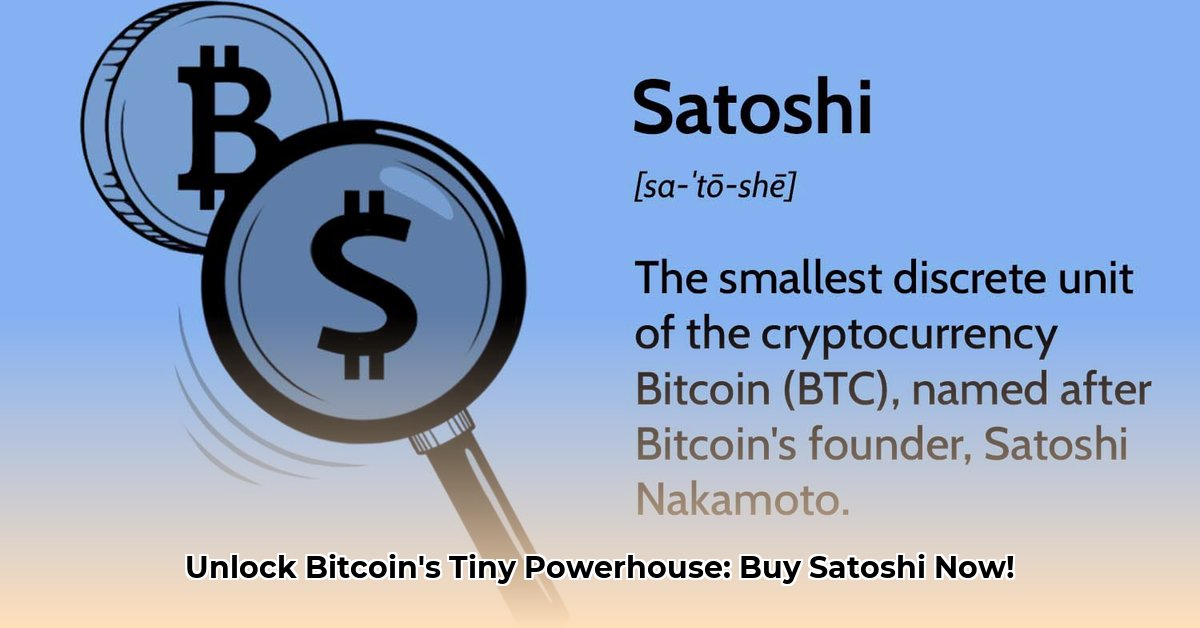
A satoshi is the smallest unit of Bitcoin (BTC), equivalent to 0.00000001 BTC. Think of it as Bitcoin's "penny." While seemingly insignificant individually, satoshis enable microtransactions—small, precise Bitcoin payments. Crucially, a satoshi (a unit of BTC) is different from a Satoshi Stablecoin (often abbreviated as SATS), a separate cryptocurrency aiming for price stability against a fiat currency like the US dollar. This guide focuses on acquiring satoshis as units of BTC.
Methods for Acquiring Satoshi
Several avenues exist for obtaining satoshis. Let's explore the most popular and efficient methods.
1. Buying Bitcoin on Centralized Exchanges:
This is the most common and often easiest way to acquire satoshis.
Choose a Reputable Exchange: Research and select a trusted exchange (e.g., Coinbase, Kraken, Binance). Consider factors like fees, security features, and user experience. Higher-volume exchanges generally offer better liquidity.
Verify Your Identity: Complete the Know Your Customer (KYC) process, which involves providing identification documents to comply with anti-money laundering (AML) regulations. This is standard practice for regulated exchanges, similar to opening a bank account.
Fund Your Account: Deposit funds via linked bank account, credit card, or debit card. The available options vary by exchange.
Purchase Bitcoin (BTC): Place a buy order for BTC. The exchange will convert your fiat currency to Bitcoin. Your balance will automatically display in both BTC and satoshis. No further conversion is needed.
2. Utilizing the Lightning Network:
The Lightning Network facilitates fast and inexpensive microtransactions.
Open a Lightning Channel: This involves sending a small amount of BTC (the required amount varies by application) into a "channel" on the Lightning Network. This acts as a dedicated payment line.
Send and Receive Satoshis: Utilize Lightning Network-compatible apps to send and receive satoshis to and from others who also utilize the Lightning Network. This is very efficient for smaller Bitcoin transfers but requires careful understanding of its functionality and associated risks.
3. Receiving Satoshi as Payment:
Some businesses and individuals directly accept satoshi payments.
- Share Your Bitcoin Address: Provide your Bitcoin address (a unique identifier) to the payer. This address will receive the satoshi payment directly.
4. Acquiring SATS (Satoshi Stablecoin): A Separate Asset
SATS, a stablecoin often pegged to the USD, trades on decentralized exchanges (DEXs). However, DEXs are significantly less regulated and carry higher risks.
Employ Extreme Caution: DEXs are inherently riskier due to their decentralized and less regulated nature. Proceed only with extreme caution.
Thorough Research: Research and select only well-established and reputable DEXs meticulously. Read reviews and look for evidence of audits or security measures.
Prioritize Security: Use a hardware wallet and robust security practices to protect your assets.
Prioritizing Security: Safeguarding Your Satoshi
Security is paramount when handling cryptocurrencies.
Hardware Wallets: Use a hardware wallet for secure, offline storage of your Bitcoin. This is the most secure method of storing your crypto assets.
Two-Factor Authentication (2FA): Enable 2FA whenever possible to add an additional layer of security to your accounts.
Strong Passwords: Employ strong, unique passwords for each platform and avoid password reuse.
Phishing Awareness: Be vigilant about phishing attempts and never share your private keys or seed phrase with anyone.
Regulatory Landscape and Disclaimers
Cryptocurrency regulations are evolving rapidly and vary across jurisdictions. The information provided here is for educational purposes only and does not constitute financial or legal advice. Consult with qualified professionals before making any investment decisions.
Conclusion: Your Satoshi Journey Begins Now
Acquiring satoshis opens the door to a world of microtransactions and granular control over your Bitcoin. By using the methods outlined above and prioritizing security best practices, you can confidently navigate the world of Bitcoin micropayments. Remember to always conduct thorough research and proceed cautiously. Don't invest more than you can afford to lose.